Virtual Staging vs Physical Styling: What Should Agents Recommend in 2026?
Virtual staging costs $30-$50 an image. Physical styling costs thousands. One wins the click, the other wins the open home. Here is a practical framework for choosing between them, property by property.
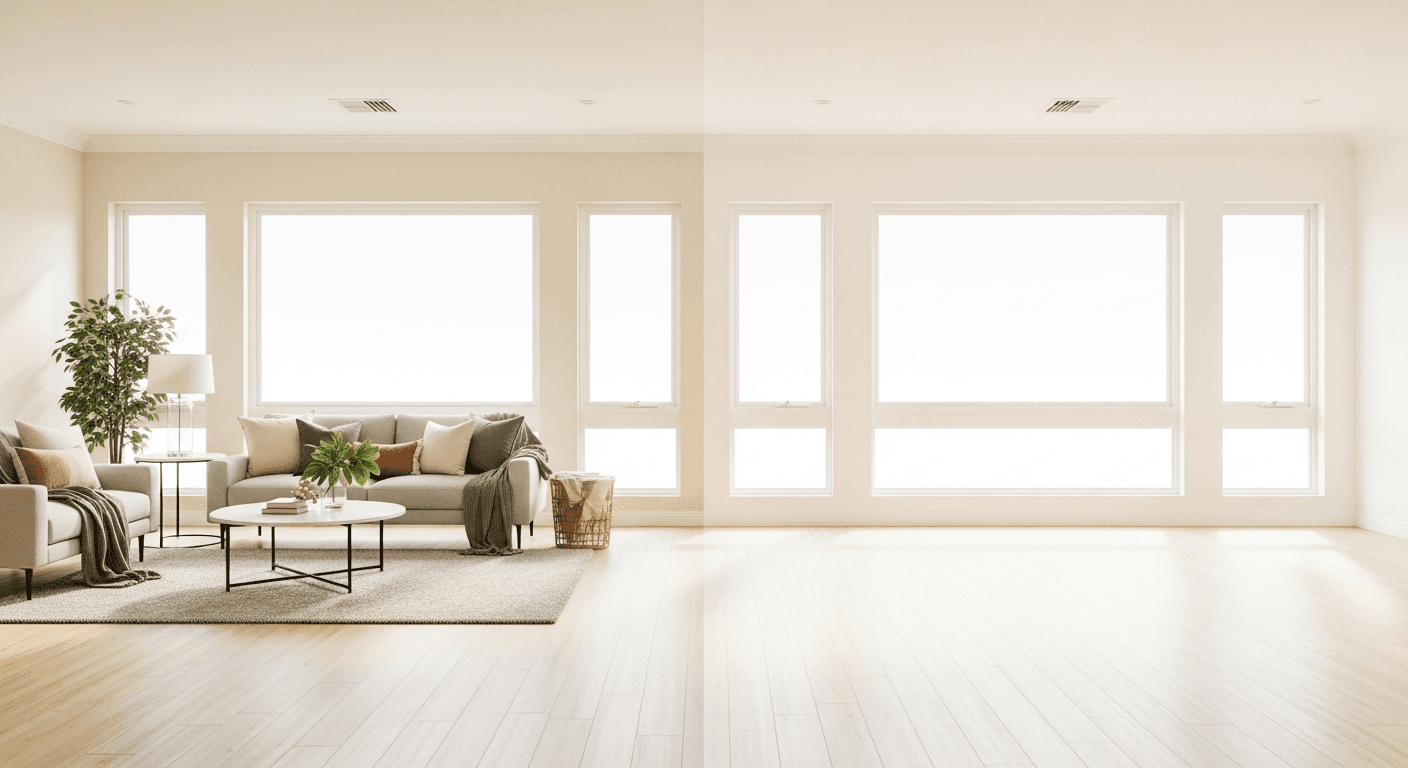
Every agent with a vacant listing faces the same fork: pay $30 to $50 per image to furnish it digitally, or spend $2,000 to $8,000 or more furnishing it for real. The honest answer is that they solve different problems. Virtual staging wins the click; physical styling wins the inspection. The mistake is treating them as interchangeable.
What each one actually does
Virtual staging fixes the online problem. Empty rooms photograph poorly and are hard to read for scale, and virtually furnished images demonstrably lift engagement - US platform data suggests staged images draw substantially more views, though local Australian numbers are thinner. But the effect ends at the front door. A buyer who clicked on a warmly furnished photo walks into a cold, echoing, empty home, and the emotional momentum resets to zero.
Physical styling fixes the in-person problem. Industry estimates put styled homes 5-10% ahead of comparable unstyled sales, and the Real Estate Staging Association's headline finding is about speed - staged homes sell dramatically faster. Those numbers are survey-based rather than experimental, but the mechanism is plain to anyone who has watched buyers linger in a styled living room and hurry through a vacant one.
The disclosure line you cannot cross
Virtual staging is legal everywhere in Australia, but the rules around honesty are tightening. NSW now requires disclosure of digitally altered images in rental advertising, with penalties of $5,500 for individuals and $22,000 for businesses, and sales campaigns everywhere remain subject to misleading-conduct provisions. The practical standard is simple: furniture in, fine with a disclosure note; walls moved, damage hidden, or rooms enlarged, never. Reputable providers watermark or caption virtually staged images, and so should you.
A property-by-property framework
- Vacant investor unit under the city median: virtual staging. The buyer pool is pragmatic, the margins are tight, and the online lift is most of the value.
- Vacant family home in a competitive suburb: physical styling. Open home atmosphere drives these results, especially while auction clearance rates sit below 50% and every bidder counts.
- Occupied home with dated furniture: partial physical styling of the key rooms usually beats both extremes.
- Premium and prestige listings: full physical styling, no shortcuts. At this level virtual staging reads as a corner cut.
- Tight vendor budget, genuine constraint: virtual staging with clear disclosure beats an empty campaign.
Whichever route the vendor chooses, get quotes rather than guesses. ListingsReady lets you send one styling brief to multiple stylists and compare quotes side by side, so the virtual-versus-physical conversation happens with real numbers on the table.
Virtual staging gets buyers through the door. Physical styling is what they remember after they leave.