Drone Photography for Real Estate: The CASA Rules Every Photographer Should Know
Sub-250g drones have opened aerial photography to every property photographer in Australia - no remote pilot licence required. But the operating rules still apply, and getting them wrong is expensive. Here is the 2026 picture.
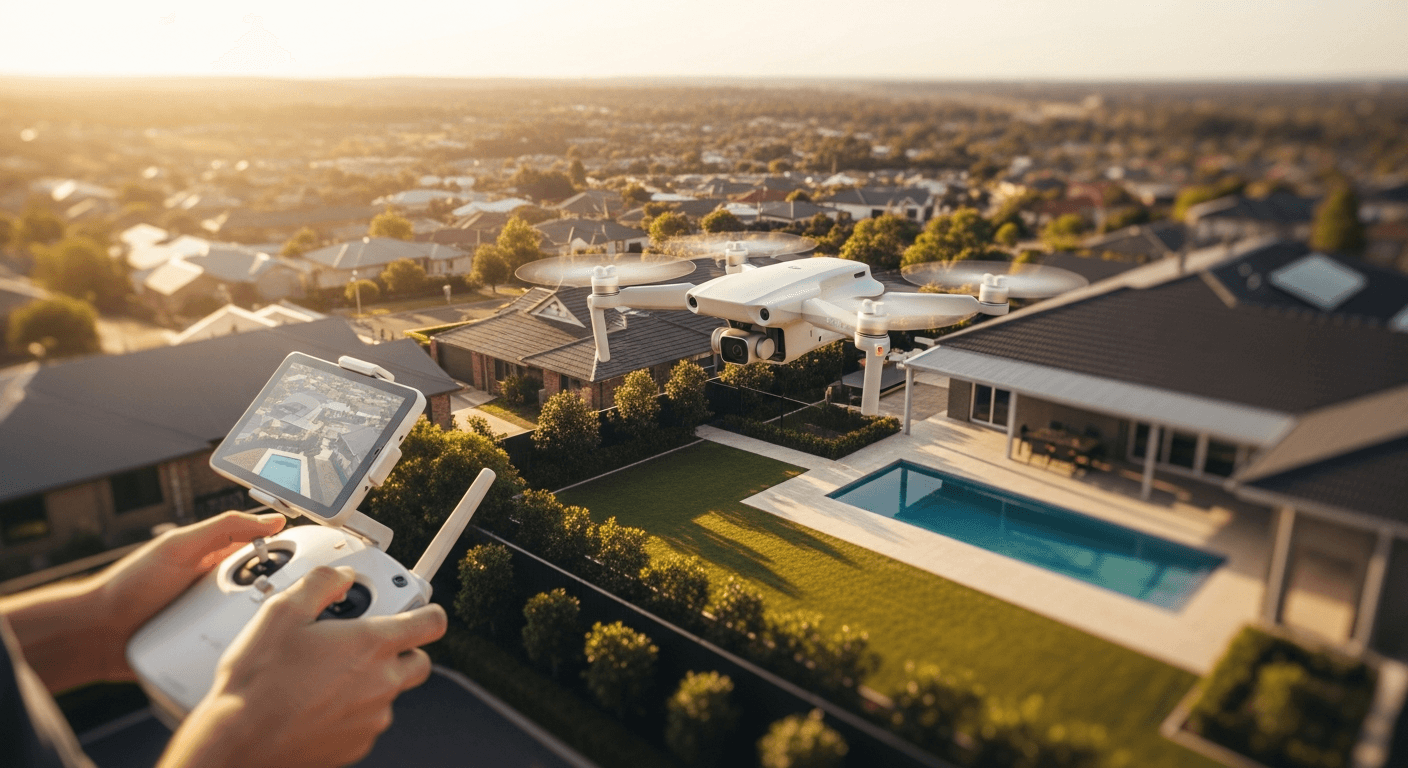
Aerial shots used to be the preserve of licensed operators with heavy rigs. Today a sub-250 gram drone captures imagery good enough for most listing campaigns, and under CASA's rules it can be flown commercially without a Remote Pilot Licence (RePL) or an operator's certificate (ReOC). That single change has made drone add-ons one of the most accessible revenue lines in property photography. It has not, however, made the rules optional.
What 'commercial' means, and why it includes you
CASA's definition of commercial operation turns on compensation of any kind - money, but also payment in kind. Every listing shoot is commercial by definition. For sub-250g drones that still does not require a licence, but you must complete CASA's operator accreditation, and the standard operating conditions bind you on every flight.
The standard operating conditions
- Visual line of sight at all times - no flying from inside the car or behind the house.
- Maximum altitude of 120 metres above ground level.
- No flying over people, and keep 30 metres from people not involved in the shoot - which includes neighbours in their backyards.
- Stay clear of controlled aerodromes and restricted airspace - a real constraint in suburbs under Sydney, Brisbane, and Perth flight paths, so check an approved drone safety app before every booking.
- Daylight only under the standard conditions - relevant if you are tempted to combine drone and twilight work.
When you need more than the micro-drone exemption
Flying anything heavier than 250 grams commercially, or flying outside the standard conditions, means a RePL - budget roughly $2,000 to $3,000 and a five-day course. Larger operations add a ReOC. For most listing work a modern sub-250g drone is genuinely sufficient, but photographers doing acreage, large commercial sites, or complex airspace regularly find the licence pays for itself in jobs they could not otherwise quote.
Pricing and positioning the add-on
Drone photography currently adds $150 to $400 to a package across Australian markets, and buyers of acreage, waterfront, and view properties increasingly expect aerials as standard. If you offer drone work, list it explicitly as an add-on or package inclusion on your ListingsReady profile with its own price, so agents booking a Full Package for a Toorak or Cottesloe campaign can see and select it without a phone call. And if a job sits in restricted airspace, say so early - agents remember the photographer who flagged the problem before the shoot day, not the one who discovered it on site.
The sub-250g exemption lowered the barrier to aerial work, not the standard for doing it professionally.